Featured Articles


Tickle The Infinite Possibilites Within

There are benefits from existing in a meditative state of being. When we meditate we are in a restful and peaceful state of mind. We have a gentle awareness. In its essence, meditation is being aware of the present moment. Through meditation we seek to fully experience each moment. This can be hard to affect.  Much of the time our attention is invested in our passions about the past or our expectations of the future. What we experience and learn in life is very compelling. Our minds give a sense of reality to our feelings about past and future events. With practice the mind can become more focused on the present. 

The mind is constantly drifting in and out of awareness. At one time most clocks made a ticking sound. You would probably notice the ticking as you walked into the room. If you sit down and start to read a book, your attention becomes focused on the content. You no longer experience the sound. When you stop reading, you will begin to notice things again. Perhaps you may now hear the sound of that very same clock, ticking away. Our reality is closely tied to our awareness and our feelings. 

English: Deepak Chopra in November 2006, speak...
Image via Wikipedia
There is a part of all of us, that simply notices all things. It does not judge and does not get distracted. It is the observer in you. It is a place of restful awareness. It is the part of all of us that is in balance. Deepak Chopra teaches mindful meditation as a process of spiritual, physical and mental health. He suggests that we can step back and look at ourselves in a more conscious manner. From here we can live in a meditative existence. It empowers us. We make decisions based upon quiet reflection in a mindful way. We do not give in to a chaotic reaction. It gives us at least one moment of consideration,  This can make all the difference in the world. It helps us to make the most fundamental choice that we can make. This is the choice of how we choose to see things. From this ability to choose we can have lives of peace. Ask people like Wayne Dyer, Ram Dass and many more and they would likely tell you the same thing.

The practice of meditation is not new. There have been meditative conclaves from almost all religions and wisdom traditions for thousands of years. These practices include the Gregorian monks, the Sufi dervishes, the writer of  the Psalms,and the Vedic rishis. All have the same goal.  They were not really seeking to become people who meditate. What we are really seeking is to be free. We yearn to transcend our normal state of being. We seek equanimity and peace. Meditation is merely a tool. 
English: This is a photograph I personally too...
Image via Wikipedia

There's a wonderful story about a spiritual teacher who was giving a lecture. He was getting very little reaction from the crowd. There was one little lady sitting up front. She had to be about ninety years old. She just kept nodding her head at various parts as he talked. You could tell that she understood perfectly what was being said. Today, he was teaching on meditation and how it changes our states of being. It is where we find the most divine part of ourselves.

Later, after the lecture, the teacher sought out the old lady. She did not seem like a person who normally would come to his lectures. They tended to be a bit younger and New-Age minded. He was simply amazed that someone like that could so identify with his teaching. Why did she get it so perfectly when no one else seemed to? How did this little old lady understand this in such an experiential way?  How did she know how to transcend her normal state of being? He looked into her eyes and asked her how she knew? She looked at him and simply said, "Well young man, you meditate, I crochet!" So we can broaden the concept pretty far on that basis. Everything can be meditative.

We exist in several states of being. There is  the observer state. There is the state processes what is being observed., Then there is the critic that evaluates what we observe. The more we identify with the part of ourselves that only observes, with its impartial view, we can begin to have the ability to be mindful about our whole lives.

The critical aspect of our being is clearly the most insidious. It is built upon our experience base and our process of socialization. When you look into the mirror you must ask, who am I  really? Are you what others tell you that you are? Do you live your own truth? This again, is a part of being mindfulness about your life. It helps us to find our way on the path. This is the part that the observer allows us to change our lives.


English: Photo of man Sungazing during sunrise...
Image via Wikipedia
While there are many methods for fostering a mindful awareness, most are comprised of practices that quiet the mind. For most people, a quiet mind is proceeded by a quiet body. Physical relaxation can be an important factor in reaching the meditative state of mind. A quiet mind helps us to not get swept away. A quiet mind helps us identify less with the experience and more with the one that experiences. As we begin to have a quieted mind, we can watch our thoughts and feelings. 

Perhaps this may be a good example. Try to imagine all of your thoughts as if they were leaves flowing down a stream. When we are meditative our thoughts pass by like the leaves going with the current. For a moment we acknowledge them. Then let them pass by. They no longer hold our awareness. This will allow us to see each thing for what it is. Now we can make the only choice that we have. This  is the choice about how we choose to see things.
The Buddhist have a saying, "There are many paths up the mountain", or sometimes, it is put as, "There are many paths to God".  In mindfulness training you may find that certain paths fit your needs better than others. For some people meditation methods such as watching yourself breathe works to foster a "present awareness". Others may find a simple stroll does the trick. Maybe a good bath puts you in that place where you can watch everything in the present moment. It really does not matter which path, school or technique that you choose if they work for you they will all lead to the same place.
This is a place of personal empowerment and peace. For one who is mindful has the power to do anything they want. We only have this moment. Yesterday is just merely a memory and tomorrow a dream. Right now at this moment, with the power of mindfulness behind you your life can be forever changed. Now you know, how to tickle the infanite, within. 

Bipolar Insomnia

Bipolar Insomnia

Mental illness is often a leading cause for sleeplessness for those who have been diagnosed with a mental illness. For individuals with bipolar disorder sleep can be a major problem. In some cases without medical intervention people who suffer from this disease can be sleepless for days. For general practitioners, diagnosing a sleep disorder may not include consideration of bipolar disorder. This is particularly true in situations where medical history does not include the diagnosis for this disease or when a patient does not self-identify as being bipolar.
Bipolar disorder is estimated to affect from 2% to 7% of the people in the United States. It is further estimated that almost 10,000,000 people will develop the illness at some point during their lives. Bipolar disorder is often misdiagnosed because it can be confused with other diseases. Often people with mental illnesses have more than one diagnosable disease. For instance, if you are bipolar it is highly likely that you will have substance abuse issues, high-risk sexual behaviors, or other symptoms. Sometimes these symptoms can be very hard to differentiate. If you have sleep problems and are bipolar make sure that you tell your doctor. It will help significantly. Keeping your doctor informed can help you to find relief from symptoms sooner. It also becomes easier to find the proper treatment.

Sleep is a major factor in maintaining stability

For all individuals sleep is an important part of maintaining physical and mental well-being. There are various reasons that people have problems sleeping. Research shows that individuals who have bipolar disorder are at high risk for instability without appropriate sleep. Sleep is a basic component in managing the stability of this disease. Without proper cycles of sleep our bodies' basic biorhythms can be significantly disturbed. These biorhythms or "circadian rhythms" manage or contribute to not only our mental well-being but our physical well-being also. Sleeplessness is not the only problem. Too much sleep can also be a major factor of instability. It can contribute significantly to depressive cycles.
If you suffer from bipolar insomnia, it's important to take some basic steps that will help you to manage sleep. The steps can be called sleep hygiene. Sleep hygiene includes several factors:
  • 1. Try to avoid napping. If you do need to nap limit napping to the early afternoon and for a short duration.
  • 2. Cut down or avoid the use of caffeine entirely.
  • 3. Limit your consumption of alcohol.
  • 4. Regular exercise is important because it helps to limit factors like adrenaline and quiets the body. The quiet body helps to produce a quiet mind.
  • 5. Meditation or relaxation methods can help significantly when patients have sleeplessness. Often this helps to attack the problems that are introduced by hypomania and mania.
  • 6. A helpful tool to help you and your doctor understand your sleep situation is to record your sleep cycles and other pertinent information in a log book or journal.

Treating Bipolar Insomnia

If you're experiencing bipolar insomnia, there are several ways that your doctor may choose to treat your illness. Often this will be through the use of medication. Medications such as Seroquel can help to induce sleep. This class of medicines is called atypical antipsychotics. These medicines can act in a powerful way to induce sleep. For some patients with bipolar insomnia traditional sleep medications like Lunesta or Ambienmay not work. Trazodone may also be used as an off-label treatment for insomnia. Trazodone is an older treatment for depression. Generally with people who have bipolar disorder antidepressants are not used. It can cause the bipolar individual to have a, "bipolar switch". This switch can cause a person to come out of depression and enter mania. Careful consultation with your doctor is recommended. For those with bipolar induced insomnia it is recommended that treatment should come from a properly trained psychiatrist.

Over-the-counter medications for sleep

Over-the-counter medications for sleep are generally formulated from antihistamine medications. Many of these medications are older drugs. These antihistamines tend to make people sleepy. This is a major factor in why antihistamine medications have been changed. Newer antihistamines do not generally stimulate sleep. Other over-the-counter medications or supplements may also contain ingredients such as Valerian root, melatonin, or other herbal central nervous system depressants. Bipolar insomnia may not respond to over-the-counter medications.

Finding solutions for bipolar insomnia

To find the right solution you may have to try several approaches. It also might require the use of more than one of these options at the same time to help the bipolar individual stabilize both their sleep and their lives.

Can Changing Your Mind, Change Your Brain?

Can our brains change in structure over time? Do our brains re-wire itself based on what we experience? These are interesting questions. Scientists have wondered if our perceptions and experiences have the ability to change the physical makeup of our brains. In 1890, William James, published an article in The Principles of Psychology. There is growing evidence that changing your mind does change your brain.

In the 1970’s and 80’s, many tests were preformed to determine if changes in perception did have the ability to change the physical structure of the brain. Some of these tests were developed and implemented by Michael Merzenich, Jon Kaas, and Doug Rasmusson. These tests seemed to show that there is a strong reason to believe that your state of mind does change your brain. However, there are some scientists who are not certain that this is the case.

There are two main types of neuroplasticity. These are generally known as, “positive“ or “negative” plasticity. This means that our mind changes it’s wiring and either grows connections or disposes of connections depending on the circumstances. An example of negative plasticity occurs when pain or trauma changes the amount of neurotransmitters. These chemicals have a big impact on the brain. If the impact of these chemicals are strong enough they will change  the structure of the brain. Since 2005 research has continued to show that the the brains ability to change is quite rapid.

Richard Davidson, is a neuroscientist at the University of Wisconsin. He has led experiments in conjunction with the Dalai Lama to see if meditation can have an effecton the structure of the neuropathways. The research seems to indicate that meditation does affect both long and short-term restructuring of the brain. This is particularly true in areas that affect emotions such as anxiety, fear, depression, and anger.

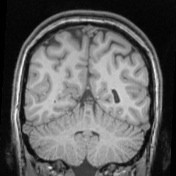
brains!
brains! (Photo credit: cloois)
From this research it seems to be clear that how you see the world and how you experience the world does have the ability to affect the physical structure of your brain. In this case there is literally a connection between mind over matter. It’s important for us at all times to look at ourselves in the self compassionate and friendly light. Through this compassion and understanding weekend change some of the fundamental connections in our brain to promote our health and well-being. When we seek to change her mind it’s important to remember that we also change your brain. This changes our ability to adapt to the circumstances and experience around us. The ability to change our brains could be a substantial tool in the arsenal for those who have mental illness to find meaningful and lasting recovery.

Feed Your Head, Nutrients As A Treatment For Mental Illness

You Are What You Eat

There are difficulties when comparing different systems of medicine. For example, westernized medicine tends to look at things in terms of pathology and not particularly in terms of wellness. Other systems of medicine, such as traditional Chinese Medicine or Ayurveda tend to take a more proactive approach and could be considered systems of wellness and not merely systems in medicine. In the previous article it is suggested that these systems are very difficult to compare.

Western medical science relies heavily on prescription medications. These medications are often synthesized compounds that effect specific symptoms. Other systems of medicine also have a molecular basis. So there is a reasonable standard that we can use to compare these systems. These systems can be compared based on two factors, their organic chemical effect and the outcomes that they produce. For instance, if a prescription medication has side effects that are worse than the disease that they are meant to treat, they're more aptly to be described as a poison. On the other hand, in many cases once diseases have developed, these medications are highly effective at managing the symptoms if not the disease. In some cases chronic diseases such as mental illnesses may require medication for the remainder of the patient's life if their illness is severe 
enough.

Alternative systems tend to take a proactive approach to treating disease. These systems focus on prevention of disease and the mediation of the basic causes of disease. They tend to use whole foods nutrients and plant products to affect wellness. The molecular structure of these substances is often much more complex and complete than that specifically engineered prescription medication that we are used to. This molecular basis of analysis helps us to compare the systems of medicine.


During the 1930s a multidisciplined scientist, Linus Pauling, began to look at the molecular nature of various diseases. He found often that basic nutrients in the right combinations and dosages had a better chance of prevention of disease or at least remission of symptoms. There is a good body of research and documentation about use of these substances for people with psychiatric conditions.


In the Canadian province of Saskatchewan there was a long-term research program conducted based on the findings of Dr. Pauling, PhD. This research has become the basis of what is now known as the adrenochrome hypothesis. This hypothesis states that hydrogen peroxide in the presence of ferritin, or iron in the blood, contributes to the oxidization of the neurotransmitter adrenaline. Once oxidized the molecular structure of adrenochrome is very similar to the structure of mescaline. In patients with high levels of adrenochrome disassociative experiences and diseases such as schizophrenia are prevalent.


This hypothesis states that through the use of orthomolecular medicine, or the use of basic nutrients in the right dosages and application, can cure or control this disease. Further research along this line suggests that other psychological conditions might be significantly impacted by the application of basic nutrients.


In patients with schizophrenic diseases a variety of B vitamins and whole C vitamins has shown to have a significant impact on the disease. The vitamins that are involved are niacin, B6, B12, and vitamin C. Significant dosages of these basic nutrients helped to reduce the oxidizing effect on adrenaline and therefore produced significantly less adrenochrome.


Traditionally Western medicine does give a nod in the direction of the use of nutrients. It is said to be an important part of health. Often, because of the influence of the pharmaceutical industry, the primary use of nutrients as treatment for disease is considered quackery.


The evidence seens to show that patients reported less disturbing symptoms and many eventually were freed from symptoms entirely. For people like Dr. Abraham Hoffer, MD, Phd and his associates the evidence suggests that this form of treatment may contribute to a better quality of life for patients with schizophrenia. Dr. Hoffer in his research and interviews talks about the use of both synthetic pharmaceuticals and nutrients over a period of time to affect these changes. He does not advocate the immediate disposal of pharmaceutical medications in place of vitamin therapy. It would seem that he feels that all healing is a process.

In the documentary film, Feed Your Head, the adrenochrome hypothesis is discussed in great detail. Many patients in the film such as the actress, Margot Kidder, assembled together to thank these doctors for their work. Much of the material for this article comes from this movie. Another significant resource for the development of this article was derived from the information listed on the orthomolecular.org website.


For further information about the promise and practice of orthomolecular medicine please review both of these resources. While there are not many practitioners of orthomolecular medicine, they can be found. Of course, not every treatment is right for every patient. But for those who use orthomolecular medicine to prevent and treat disease the use of basic nutrients has changed their lives.


Orthomolecular medicine contributes to health on a much wider basis than just schizophrenic disease. Since the 1800s scientists have been working to understand a sentiment that computer engineers have known for a long time, if you put garbage into a system you get garbage out of the system. In the case of orthomolecular medicine it is fair to say you are what you eat, so if you have a mental illness, be sure to feed your head.

One Way To Find Peace

This article is dedicated to Nancy Randolph, without her this could not have been written. She is one of my personal heroes. She works in Manitowoc, Wisconsin, at the Manitowoc County Human Services Department. She applied for the initial grant to start Painting Pathways Clubhouse. On behalf of the members and staff, thank you!!
Most of us can identify with a certain amount of suffering. Some are submerged in it all the time. It, suffering, is part of the human condition. Life can be hard sometimes. Fortunately, you can learn to grow. You can begin to move past much of the suffering. It can be hard to do so alone. We must look for teachers and companions who are willing to walk down the path with us for a while. Hopefully we will find this sort of mentor and friend. The caveat is that you have to actively seek out help and advice. This is a place where many falter. It is never easy to ask for help. But take the chance, it may just change your life. 
My life experiences gave me a pretty practical understanding of suffering. I began to see this going on in the lives of others also. I could identify with the terrible cost to the souls of those who suffer. That cost can easily spread to the friends and families around them. All of this has got me thinking. When I see someone who is suffering I just want them to know they are not alone. I want to help her. The question is how do we do it? 
I have already learned that the real magic happens when you can touch the person behind the trauma. It helps to establish a place of safe acceptance and compassion for that person. This demonstration of goodwill can dry up tears and encourage. To accomplish these things with people is a bit of an art. You have to be open to them, but not captivated by their crisis. You must be compassionate and decoupled from pity. This is manifested by two people talking openly and unmasked. Being open in this way is the real miracle that we experience. I get to see these events more often at this point in life and have become grateful in the process. Sometimes we can get caught up in the drama of others. The passions are intriguing. Will She? 
Won’t He? Will they have to operate?  Are you gonna go to jail? It is hard to not get caught up in the process and the drama. Many of these crisis's are heart wrenching. Our best role is that of gentle friend. What can we really tell them about their pain that they don’t already know? To hold their hand and cry with them may be the greatest human service you can provide.
You can get convinced that you must take action or the person will face peril. Thankfully humility is ubiquitous in the universe. It offers constant little reminders for those who choose to see them. Although we are occasional conduits of grace and good will, we are not the only source of grace that is available to others.
Jane & Eglinton
Jane & Eglinton (Photo credit: AshtonPal)
Life, in the face of our hubris, occasionally will show us an absolutely beautiful illustration of grace. This grace is demonstrated in simple, humble human interaction. It is a moment that is bigger than just that moment. It is a bond between two people. It is no different for you and me today. It is about us. At that moment there is a partnership that is built.  
The Buddha says that to gladden the mind, we should think of things of virtue. One of these moments of virtue has been in my remembrance always. As I watched the events transpire it gladdened my mind considerably. It taught me so much in just one moment.
I spend almost every day in a wonderful place called Painting Pathways Clubhouse. The clubhouse is a successful example of what makes a great community. It is the best that I have ever seen. Great passions and ideas are mediated into something truly impressive. Most of the people who make things happen and make decisions are the members. Members at a clubhouse are people who have a mental illness. It is clear that their mental illness does not prohibit accomplishment. The clubhouse is thriving because of the members. The staff would not be able to run the place on their own.
I have come to know and appreciate many new people in my time there. Most feel like adopting family to me at this point. But in this case, I met my friend Jane on a winter afternoon. She came into the clubhouse like many do. She was a bit confused and lacked confidence. She was a good person who really felt fear about almost everything. In the process of her life she lost a good job, her emotions, her ability to remember and all of her confidence. She was not sure if the clubhouse was right for her. What would she be forced to do? I think that I suggested trying to answer the phones. She broke out in a dead sweat and swore that there was no way that she could do that. She wasn’t sure if she can handle taking messages. 
I am not sure how it happens. She began to answer calls. There is a set of skills that someone has to master in order to operate the phones. She had already achieved more than she had expected to achieve. She found a place to sit. Other members and staff  worked side-by-side with her. She became part of the business unit at our club and answers the phone regularly now. A short training session was held so more people would know how to use the phone system.  They used my friend as the example receptionist. She did the job without a flaw.  It really touched me. “Do you see recovery is possible? Good for you, Jane! See, I knew you could do it.”, echoed through my thoughts. 
We went our separate ways for a while. I got involved in a few projects and saw Jane on occasion. We would say hello and pass. By that time I had gotten  pretty used to helping and supporting Jane. Often, I have been someone who she could talk to. One day I walked in and saw dear Jane in a state that I had seen before. This was not a posture of happiness, it was a crisis.
Boston in the View
Boston in the View (Photo credit: Werner Kunz)
Instantly I saw the eye to eye contact she had with one of the staff members. The staff member showed incredible compassion and a face of hopeful acceptance. She cared for Jane in such a tender and human way. I captured an image of it. I went about my business in the usual way. She was getting what she needed. I was confident that she was in good hands. These two wonderful women will be etched in my memory as a moment of virtue and it still gladdens my mind. Like the song says, “We don’t always get what we want, but we get what we need”. 

Self-Compassion In Mental Health Recovery


Self-Compassion?

In our effort to find recovery for ourselves there are some challenges that are significant. It is normal that our experience up to this point has been filled with things that make us afraid. Fear can come from many places. Many of these fears make it hard for us to accept ourselves and our challenges.  This type of fear can make it very hard to accept things as they are. They can make it difficult to accept ourselves in a loving manner.  Without loving ourselves in this way it is likely that we will never make progress in our recovery.   Compassion for yourself will allow you to see your disease openly. It helps to remove the significant barriers that impacts our ability to change. With the power of a compassionate point of view we can look at those things that have hurt us. It helps us to accept that we have a disease. It also helps you to see the impact of your disease on those around you in a new way.

In the course of my mental illness I came to the realization that having a mental illness strikes deeper than just the mind. It becomes an affliction of the heart. The years of suffering dig deep within us and can eat us alive. These wounds are so tender that without the mechanisms of compassion we are not able to grow. Abraham Maslow [1968], that emotional maturity requires a mind that does not judge, is self-forgiving and includes a loving acceptance of self. Sometimes this can seem difficult to view ourselves in this light.

In doing my research I looked to see what various publications had to say about self-compassion and how one might empower them to accept themselves in this light. I would love to give you a simple light switch method which enables you to instantly be self-compassionate. Self-compassion is a lifelong process. There are many days with pain that cloud this perspective. We find that as we watch our pain then we start to understand it, the pain becomes instructive. This instruction is part of our learning in self-compassion. To be able to openly look at those things that imbibe us with suffering becomes transmuted into the power to overcome the death grip that is associated with our pain. It can free us from ruminating in pity for ourselves and can free our body, mind, and spirit.

What is self-compassion? The literal definition of compassion means “to suffer with”. Having compassion for yourself means that you have to recognize your suffering. You must look at this suffering in a kind and loving way. We have to allow ourselves to look at our disease openly and honestly. Our egos have been trained by our experience. Often this experience is derived from our process of becoming a social being. We get used to hearing that outside voice that tells us that we might not be, "good enough in another person’s point of view. We tend to believe whatever these outside voices tell us and take this to heart. This guilt, shame, blame and condemnation will kill our sense of self worth.

Self-compassion is a concept that is deeper than just your self-esteem. A bully can feel pretty good about beating someone else up. A person may think so highly of themselves that they can see nothing but their wants and desires. To make progress in recovery you must be able to see yourself clearly. You must forgo the judgments and condemnation. View yourself in a warm an accepting manner. We have to accept that in this process of recovery there will be bad days. There will be pain. Self-compassion will help us to accept the way things are now and give us perspective on how to change for the future.

According to Karen Neff PhD, an associate professor at the University of Texas at Austin, self-compassion has three main components. The first part is self-kindness. Self-kindness allows us to look at our failings and suffering with a gentle perspective and helps us to understand that bad things happen to good people. With self-kindness we are equipped to deal with the self-hatred and judgment we face. We can allow ourselves both the mistakes of the past and those of the present.

The next part of self-compassion is to realize our common humanity. All of us have had struggles, suffering and pain. When you realize that everyone experiences these things it helps us to understand not only that it is ok for us to have issues but that others around us may have some too. It breaks down the feeling that you are the only one with a problem. It helps us to be less isolated in our pain. We find that we are less judgemental about ourselves and others.

Self-compassion requires that we take a balanced look at our thoughts and emotions. This shows us the need to foster a place within ourselves that is aware of our thoughts and behaviors. To take this balanced approach we must develop our minds. This development of our minds may be called mindfulness. When we work to be aware of our thoughts and feelings we can deal with them openly. This makes perfect sense. If we do not realize that there are fears and judgments in our deepest thoughts we can do nothing to deal with them. They control us as compared to us controlling them. Even if we cannot control these feelings and thoughts being mindful of them and patient will in time lead to acceptance.

I encourage you to spend 5 minutes, two times per day, to sit quietly and watch your thoughts. While you look at your thoughts choose to look at yourself in a tender light. Be kind to yourself. Soon you will begin to notice that you are developing the person behind the disease. Once you can do this you are on your way to recovery.
Enhanced by Zemanta

Do You Have A Kindle?

Celebrate our growth! The Self-Compassion Blog is now available for Kindle!

Subscription rates are reasonable You can read this blog anywhere that you go. For more details see this blog on amazon.com..

Enhanced by Zemanta