Featured Articles


Alas Poor Vince I Knew Him Well - Suicide of A Kind Soul


Suffering
Suffering (Photo credit: Mockney Rebel)
Last week, one of the people that I have been privileged to work with found that life was too difficult to bear. It would seem that he had no self-preservation instinct left at all. I know this place all to well. I have been there too. The difference between Vince and myself is that I got caught.

This man may have been one of the most kind and gentle souls that I have ever known. He lived in absolute terror for many years. He had the overwhelming feeling and belief that people were watching him and out to get him. Unfortunately many of the people who were supposed to be looking out for him fell short of their responsibility. I say this because I have heard comments from other practitioners who did not accept that he had strong paranoid beliefs. I’m not writing this to condemn them. I am however suggesting that it is very easy for us to discredit the feelings and symptoms of those people that we work with. I think that this is somewhat understandable with the enormous caseloads and limited resources that many of us have to help others.

It’s very likely that in this case his kind and gentle demeanor worked against him. It simply amazed me that anybody who was so kind and gracious could believe that people were out to get him. We talked often. I never doubted that he was scared. I never doubted that he was troubled. We walked side-by-side, hand-in-hand, together for a while.. On a daily basis I saw how much fear this man went through. It may sound odd, but I don’t mourn his death. Death comes to us all. What I do mourn is his suffering. Perhaps this is because suffering is something that almost everybody can identify with.

The Buddha suggests that all of life can offer the substance of suffering. Life involves suffering. Death involves suffering. Sickness involves suffering. Getting what you want involves suffering. Getting what you don’t want involves suffering, the more we struggle to hold on to everything, the more we suffer. Life is a process of constant change and continued losses.

We do not ultimately become happy because of that car, that girl, that job, or any other external factor. When we cannot see anything but incomprehensible fear, none of these things can have a lasting positive impact. All of these things will feel like a loss in time. This is particularly true in the case of people who have mental illnesses. Unless you have lived in this space you may not truly be able to understand. I don’t believe anyone wishes to have a life comprised of a repressive mind. Perhaps this is why I am not trying to impeach the practitioners that he worked with. It can be very difficult to identify with the details and the symptoms unless we can make a comparison to our own suffering. How can we clearly look at someone who has a mental illness? What factors occlude our views of others?

I think there’s a trap that we set for ourselves when we work with others. Do we see those  that we work with as people? Can we recognize their humanity, or do we see them as a collection of symptoms? Do we see them as a diagnosis? Without the recognition of their humanity you cannot make a lasting impact on somebody’s life. Unfortunately, the way that these cases are delivered to us are via a diagnosis and symptoms. These diagnoses indicate certain protocols. It would seem that there is a one-sized, fits all, application of treatment. This does not work well in an environment where each individual has their own set of challenges.

Each of us, has our own path up the mountain. Due to this, I would like to challenge those who work with those who suffer to see each person in a holistic light. Strive to not see them as just a diagnosis. Strive to see the diagnosis as a description, a general description, of a predicament. When we look at our treatment protocols, we have to consider the whole person in order to help them. We have to look beyond the newest fads in treatments. Instead we should look at working with people as other craftsmen look at their trade. A master craftsman looks at his projects to find their hidden potential and selects his tools carefully to affect that outcome. I would like to urge all of us to look at people in this way. Hopefully, we will become ever more experienced at creatively meeting the needs  of others.

For me Vince will have a lasting legacy. He is such an excellent example of a compassionate soul that he has taught me a lot. These lessons have been incorporated into my set of tools. With each individual that I meet, I seek that hidden potential. Perhaps the example that he set with his gentle and kind manner can lead me to better understand those around me. I am certain that it will help me to continue to look at people with compassion and hope. I am confident that through his example I can increase my ability to be a servant to those around me.

Vince, I want to thank you for all that you’ve taught me and the confidence that you put in me. To gladden the mind we need to consider things a virtue. Without a doubt, my time with you, and my experiences of you, are full of virtue. With your passing, I will celebrate your life in the best way that I can. You will be with me always.

Mind Over Matter - Can We Heal Ourselves With Our Thoughts?

brains!
brains! (Photo credit: cloois)
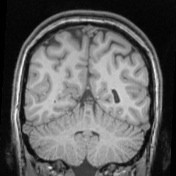
I once asked a medical doctor, a specialist in his trade, if he believed in a mind body connection. He simply said no. I then asked him a question. If there is no mind body connection how do you wiggle your toes? I am sure he understood what I was asking. Do you believe that person can influence their health based on their state of mind. His training and experience were built upon protocols that examined and managed disease through biochemistry once a condition existed. For him there was no proactive approach. To him the only cause of disease that he could consider was on that basis.
More and more research is being conducted on how much our point of view; our minds in its conscience and less than conscience minds affect not only our bodies but our whole universe. Physicists and cosmologists have felt for some time that merely perceiving things brings them into their manifested form. Scientists in their search for understanding how our universe exists in the state that it does have found that the very universe changes based on our perspective. Theories like Einstein's theory of relativity and Schrodinger's and his infamous cat.
Setting the physics aside for a bit, let's consider how different states of emotion can be connected to biophysical outcomes. One good example of this is the fight or flight response. At the moment that the mind detects a crisis situation developing, changes that are subtle and not so subtle begin to happen in the brain. These changes are distributed to both the electrical activity and the neurotransmitters that our brain uses to control the rest of the body. There is an intense increase in the rate that our synapses fire. Both our sympathetic and parasympathetic nervous systems work to increase breathing and heart rate. Our adrenal gland produces both adrenaline and cortisol. Both of these chemicals introduce changes in the body. It also can produce significant damage after prolonged or frequent production in the system. It can affect the condition of the heart, lungs, and as research continues it appears that it affects the immune system. There are some studies that suggest that within seconds of stressful stimulation changes happen in the way our immune system works. This change includes changes in the very cells and structures that our bodies produce. It can affect the ability of the body to heal itself and in other cases can directly start attacking parts of the system.
These changes are also echoed in the digestive system. Some people consider the stomach to be the second brain. This is because of the high concentration of nerves that are located in the area. Sugars (glucose) increase in the blood.
As the body is pushed to the limits, feedback through the erosion of function and messages returning from these systems causes further changes in the brain until it actually alters its own structure physically, electrically, and chemically. If this cycle continues in both intensity and frequency further and further changes (not particularly beneficial) occur the whole system becomes damaged. With enough stress our DNA can begin to change via entheogenic responses.
The basis for these changes in a causal way is controlled by the perception of events as they develop and how we (in our minds) interpret these events. If we see danger we react to that danger, if we experience things that we believe are beneficial our bodies and brains react to that too.
Another good example might lie in diseases such as fibromyalgia and chronic fatigue syndrome. Recent research has indicated that these might ultimately be caused by the hypothalamus becoming exhausted and then sort of going off line. It is similar to when a computer has reached a critical condition and shuts down. It is like the infamous, "blue screen", that so many computer users have experienced.
There seems to be a clear connection between how we see things and how body reacts. We have the ability to do some fantastic things. Our bodies are much more accomplished at producing the chemicals and enzymes that keep us well. In a healthy state our bodies are the best pharmacy. This indicates a strong causal relationship for the belief that our state of mind does change our body. It is mind body medicine in a nutshell. Our minds not only give us the ability to move our toes on command but it can change the automatic responses that our body takes to deal with differently perceived environments.

The Use of Herbs and Supplements in Mental Illness

Pictures of herb samples from categories of Ch...
Pictures of herb samples from categories of Chinese Herbs Tonifying Herbs: Herbs that Tonify the Yin (Photo credit: Wikipedia)
The use of herbs for the treatment of mental illness is not new. Traditional Chinese Medicine or TCM has had preventive and acute care formulas. Other cultures have similar offerings for treating the mentally ill. Mental illness manifests it disease in the mind, body, and spirit. It is good to look at all of the ways that we can foster our mental health. There are many things that we can do to impact our lives in a holistic manner. All three aspects of ourselves require unique tools for health. Herbs are useful to treat the body and mind over the long term. Many of the best herbal treatments work to prevent the cause of disease. In their whole form most herbs are naturally balanced and have less undesirable side effects.
As with all medicines it is best to check with your doctor to be sure that there are no bad drug reactions. There are clearly times when certain herbs should not be used. For example, 5-Hydroxytryptophan also known as 5-HTP or oxitriptan, is not indicated when a person is taking carbidopa (for the treatment of Parkinson's disease). This supplement is usually derived from the Griffonia_simplicifolia plant. People with depression and binge eating patterns may find some relief from using this. In each case we have to balance the benefit with the risks
If you are considering adding herbs to your treatment regiment it is wise to seek a certified herbalist or perhaps an osteopathic doctor. There several excellent herbal systems for treating mental illness. Traditional Chinese Medicine and Ayurveda from India offer time tested help. The people of Tibethave a wide variety of Tibetan herbs for restoring and preserving health including mental health.
Many of us have now heard about herbs for mental health like St. John's Wort. This herb has been shown in a statistically significant way to impact depression. There are lesser known supplements. Niacin (vitamin B3) may have a fundamental function as a nutrient. Research shows that people with schizophrenia are deficient in niacin. It helps to balance out various neurotransmitters. Another effective tool for relieving the effects of depression and support mood is rhodiola rosea. This herb is thought to effect depression by optimizing serotonin and dopamine levels in the brain. If you are bipolar or have panic or obsessive disorders you may find help in the form of inositol. People who are interested increasing there intake of this can eat more red beans and cantaloupe. There are also commercial preparations that are available. No matter what your mental health issue herbs and supplements are good additions to your health care regimen for body and mind.

Western Vs Alternative & Complimentary Medicine - How to Decide?

The original advisory opinion was requested by...
The original advisory opinion was requested by the World Health Organization in 1993. (Photo credit: Wikipedia)
What is wellness?


According to the World Health Organization wellness, "is a state of complete physical, mental, and social well-being, and not merely the absence of disease or infirmity." This is not a measurement you are likely to nail down in one neat package. So figuring out what systems of medicine to use is a hard choice if you only consider one way of looking at it.
Each System Produces Data
In 2005 there was an article about the correlation between Chiropractic care and the levels of serum thiol. Serum thiol is a tool that is used to measure your body's ability to heal its own DNA. Although this test is not completely inclusive it does give a good estimate of the overall potential for wellness. It does not actually indicate wellness. The research compared the clinical result of the thiol with ratings of wellness as a result of chiropractic care. In general the relationship between high levels of thiol in the serum correlated to high levels of wellness as it was perceived by the patients. What is it that the data really tells us?
While this paper does show a strong connection between these tests it is only anecdotal. This can only show an anecdotal relationship because the data does not really have a one-to-one relationship. The data is not the same type of measurement and therefore cannot speak directly to the relationship between the two. It does show statistically how often levels occur high on both tests. If these levels are both high at the same time we know that they are likely to indicate wellness. This is a lot like testing soil. When the chemistry is right, there is an environment that is conducive to getting healthy plants. It does not guaranty healthy plants however.
A Difference In Perspective
It is hard to find a common perspective for tests measuring clinical levels of a substance to a subjective rating of wellness. It starts to become clear that finding wellness for ourselves is a life-long process of learning. We have to consider our condition and what various systems of medicine provide us to individually address our wellness. We must look at a number of factors which may include trial and error to figure it out. We can compare systems of medicine based on the outcomes in overall wellness. There are challenges to understanding what tools may be best for us.
What makes comparing systems of medicine so hard is often how the systems see things. Some systems of medicine were developed to manage the disease and infirmity in us. In many ways these systems are effective at stabilizing and managing these diseases. Westernized Medicine has been busy over the years developing tools to detect disease. It is not surprising to learn that tests used to detect disease are not particularly effective at testing wellness. The definition of wellness contains not only the lack of disease, but a more completely harmonious state of being. These systems are helpful to alleviate disease in many cases. That certainly contributes to wellness. At lease most of the time.
When A Medicine System Is Not Helpful
There are definite times when these medicines decrease wellness. It would not be helpful to take a medicine that introduced an overall drop in wellness. Sometimes this drop may be due to undesirable side-effects. At other times wellness would not be present without the medicines. We have to understand how to evaluate things based on our needs. There is more than even how our bodies feel to consider.
Social scientists have also looked to apply metrics to wellness with much the same result. In the desire to cure mental disease traditional medical treatment indicated medication to both stabilize and manage the disease. Again this does not measure wellness. It measures how often a person has undesirable mental conditions and what medications are likely to change that state of being. It only addresses chemistry based on diagnosis of disease. Since it only considers one part of a person's illness it can be considered myopic in its approach. It is in many cases an important factor in care but not a complete solution.
A Balanced Approach
The study of peer supported care systems has shown that they support wellness and recovery from mental illness. This data showed that wellness was not limited to any specific facet of their lives. It seems to be better at managing manifestation of disease than medication or therapy alone. Again, for some people medication is an important part of care. So it would be a poor choice to use one and not consider the other.
What systems will you choose?
Comparing Westernized Medicine and Alternative and Complimentary Medicine can be a daunting task. The data that is produced from the process of studying them is different. To understand the dynamics of these choices we may consider things like the serum thiol. We can now collect a list of things that work most of the time. This can give us a great place to start. We must begin use other tools to narrow in on the solution that is right for us. Look for the markers that indicate your wellness and combine those in to what systems of medicine you choose. This will promote your health and well-being. It is at this point that you can decide, Western vs Alternative Medicine.

The Role of Peer Support In Mental Illness Recovery

Rethink Mental Illness
Rethink Mental Illness (Photo credit: Wikipedia)
It is safe to say the dominant concerns of mental health institutions are to stabilize and manage the effects of mental illness. Less attention is brought to bear on actual recovery. There is a growing body of evidence that supports Peer Support Specialists as an effective tool for helping people find recovery. There is enough evidence that Medicare and most Medicaid programs accept billing from certified Peer Support Specialists. There are a growing number of private insurance companies that are accepting billings too. The ones who aren't accepting billings seem to be studying the dynamics of it. It seems foreign to many of us to think of mental health as something that you have a chance of recovery from.
Carl Rogers was a professor and researcher in psychology. He was distinguished enough in his achievements in mental health that the American Psychological Association gave him an award. His research showed that if you build the person behind the disease you heal the whole person. He noted that for this to work you had to have a very open view of someone. Many therapists could not practice at that level so it is not used much. It seems that people who have recovered from a mental illness can adopt this mindset easily. These people can see the person behind the disease. It offers hope when someone truly understands the challenges you face. The Buddhists suggest that we heal with our presence. Where we offer peace, here is peace. Where we offer healing, there healing is also. We do effect the people around us. Peer Support Specialists impact their consumers in a meaningful way.
So what is a Peer Support Specialist? A Peer Support Specialist is a person who has made significant progress in their own recovery. They are people who are generally interested in the wellness of others. These people are dedicated and seek certification by their state to bill and practice as a Peer Support Specialist. Peer Support Specialists have practical experience in building support for lives challenged by mental illness. They have done it themselves and often know the best local resources. They will know where to help you look for help and know how to speak the language of those sources. Many of them have worked with the agencies for their own needs and have built many good contacts.
Peer Support Specialists work at all levels in the system for example, the CMHS National GAINS Center for Systemic Change for Justice-Involved Persons with Mental Illness is highly supportive of what they call Forensic Peer Support. This is peer support for those with mental illness involved in the criminal justice systems. Some Peer Support Specialists work directly for insurance companies. Some county mental health systems are also using Peer Support Specialists to help in times of shrinking resources and it seems to be working. These individuals, working as a part of a team of practitioners are making a big contribution in the lives of others.
If you are looking to become a certified Peer Support Specialist the Depression and Bipolar Support Alliance is a good place to start. They have excellent information listed on their web site. They are also a good resource for information if you are looking to contact peer support too.
If you are recovering and not yet sure that you wish to become a Peer Support Specialist that is okay. When you are ready it is rewarding experience to invest yourself in someone's recovery. To those Peer Support Specialists, agencies, and people effected by mental illness, keep up the good work. It is never to late to begin recovery.

Alternative Medicine In America

Journal of Alternative and Complementary Medicine
Journal of Alternative and Complementary Medicine (Photo credit: Wikipedia)

Americans Use Less Alternative Medicine Than Other Countries


World-wide the amount of people who use some form of complementary and alternative medicine, or CAM, is estimated to be 65% to 80%. This translates roughly into 3 billion individuals who use systems of medicine other than the model we are most familiar with here in the United States. In our country the use of alternative medicine is estimated to be about 36%.  The typical American person will use these therapies in addition to our westernized system of medicine.


To change the balance of how much CAM and regular medicine we have to change certain aspects of both our culture and system of care. In the past our doctors were trained around treating symptoms and disease in a reactionary model. Certain conditions indicated specific intervention. Then our doctors started to focus more preventative care. This was reinforced by research that showed that perhaps we could take a slightly longer view on medical care. At this point there was still a large reliance on intervention with medicines or procedures. 


Western Medicine vs. Alternative Medicine


Logo of the United States National Center for ...
Logo of the United States National Center for Complementary and Alternative Medicine , part of the National Institutes of Health. (Photo credit: Wikipedia)

This system of medicine has made some wonderful strides. During the process it evolved into an 
institution where often the most humble and human qualities were ignored. This is in contrast to many alternative systems of medicine. Much of the philosophy behind these systems strive to seek a balance in all of life. Physical, mental, and spiritual factors must be addressed to have complete wellness in life. 

Alternative Medicine Acceptance Grows

Our growth as a society has begun to really change both individual acceptance of alternative 

medicine and that of the medical community. Approximately one-third of all American schools of medicine offer classes in alternative medicine.  Some of the schools that are included in this list are Harvard, Yale, John’s Hopkins, and Georgetown UniversityThis new found acceptance has spread to encourage some alternative medicine coverage by insurance companies. A recent comment from insurance carrier Mutual of Omaha said that it saves about $6.50 in covering alternative medicine. 

Yellow
Image by Sprengben  via Flickr

While alternative medicine in our society is less prolific than in other parts of the world it is growing. Support for this has come from a new trend being considered by our institutions that are charged with overseeing and paying for medical care. This consideration is called “Evidence Based Medicine”. Simply if the research shows that something works, use it. This is true even if it may not come from your tool chest. With continued research into the efficacy of alternative medicine the percent of Americans that use it will grow quickly.

Belief vs Hope?


Which Is More Important In Mental Illness Recovery?


Journal of Semantics
Journal of Semantics (Photo credit: Wikipedia)

Recently, I’ve been following an interesting battle of semantics. Both were offering words of slight distinction. These terms were presented relative to mental illness. What you see posted below, is what I wrote in response to it. To both parties in the conversation, I give you credit. You have both identified matters of import. This is true even if these matters are wrapped in semantics. This discussion inspired me to write this as an article. These wrappers of linguistics cover an underlying fundamental principle about improving our lives. 

Parental Advisory: Explicit Semantics!
Parental Advisory: Explicit Semantics! (Photo credit: dullhunk)

Does It matter?


It may be just semantics or maybe not. It  does not matter what you call it belief or hope. There is a great barrier of fear in people. This fear is generally of the unknown. While in this state it is very common that people are reactionary and lack clear perspective. They don't realize what they can and cannot control.
They don't realize that the way that they have to look at things from this point forward is going to be entirely different. It can be hard to dismiss your entire ego. This presents a big challenge.

The Buddhists have been trying to tell us this for 2000  years. It is very hard to identify with our core being. Most of us identify with the present experience that we are having. These factors all contribute to limit our ability to make good / rational choices.


It Gets More Complicated


To compound this, people who are suffering from mental illnesses cannot identify with the life that is free from suffering. The suffering that they know is at least familiar and therefore more comforting than the vague promise of equanimity. It can be difficult to sever the attachment that we have to our suffering.
As a person does begin to believe or to become hopeful, they begin to have the ability to recover. In this way they have overcome the first hurdle. This hopefulness / belief may be based on an understanding that they have options. Options offer empowerment.


Belief & Hope!


As I have suggested, fear is the fear of the unknown. Our part of the puzzle is to help people to come to terms with, and understand their predicament. This helps them breed basic human understanding and compassion. This breeds the ability to self-advocate. Now, in this way, I can both believe in and have hope for people, not just the mentally ill.

Personal Experience With Recovery

An emoticon with a smile. For more emoticons i...
An emoticon with a smile. For more emoticons in Wikipedia, see Wikipedia:Emoticons. 32px|alt=W3C|link=http://validator.w3.org/✓ The source code of this SVG is valid. Category:Valid SVG (Photo credit: Wikipedia)
Do you have a personal story of recovery? Do you write on recovery or compassion? We're interested. Please contact us. Email Us Here. We believe that everything is possible when accomplished by a community. 


I find other peoples perspectives informative about the way that I see mine. The student and teacher is one. So if you have something to say give us a heads up and we  will consider your post. Thanks in advance 


Bill

Positive Psychology - A Consumer's Story - Todd Mueller

This story is part of an ongoing series about people who have mental illness and are beginning to find or have found a meaningful level of recovery. I think it’s good to hear the experiences of others who are dealing with their own mental illnesses. We can use these to help us accept ourselves and identify our issues in a tender and loving way. Todd is a wonderful man and has made some great strides in his life. I would expect this to continue as he becomes more involved in the clubhouse where he is a member.

Hello My Name Is Todd Mueller And This Is My Story


I had a normal childhood. I had excellent scores in grade school. But high school was a different story. I started going to parties when I was 15 and continued until I was 23. I turned 18 in my senior year and was able to go to bars. When I graduated in 1977, jobs were plentiful. I started working at Manitowoc Ice.when I turned 23 I met my wife Ronnie and was married in 1985.

My misery started in 1999 with backaches. I tried Vicodin and it didn’t help. I was sent to Green Bay and put on an old antidepressant called amitriptyline. It worked. I saw many doctors and made many trips to to clinics and hospitals including the Marshfield clinic. From the numerous MRIs, CT scans and a spinal tap, the doctors diagnosed me as having migraines. My migraines happen on a daily basis so I stayed in the dark as much as I could.

You can’t imagine the suffering I had. The physical illnesses were constantly rolling around in my head. Finally I started to realize something else was wrong. Mental illness. Finally the clinic in Two Rivers talked to me about seeing a psychiatrist. The psychiatrist was in the Manitowoc. She said I had anxiety, and gave me some medication samples and sent me on my way. The second time I saw her was in the waiting room and I was crying. The next week I committed myself to holy family mental health unit with a nervous breakdown. I stayed in there for six days. I met a psychiatrist there. That was 1999. He worked with me until 2002 and said he could not help me anymore and that I should go to Green Bay. That is when I quit my job. I could function no more.

Todd Mueller -Photo Credit William Ehrendreich
I found a psychiatrist in Green Bay and the first thing he said after looking at me is you need to get on disability. He interviewed me for two hours. Diagnosis: severe bipolar mixed type I and type II and also an anxiety disorder. After two tries and a lawyer I got my disability. My psychiatrist and I continue to work on combinations of medications that helped me for about three years. I had faith in him. We finally came up with a combination of medications that help me. We worked together when I needed adjustments or am depressed or stressed out. I sometimes have suicidal thoughts. The migraines were resolved by a knowledgeable neurologist with a daily medication which I still take today. In approximately 2005 I started to drink in bars again. This put a big strain on my marriage. Finally I quit in drinking entirely in 2010. I have not had a beer since.

I started seeing the new therapist in 2012. She found painting pathways clubhouse on the Internet. She printed it out and I decided to give it a try. I was impressed. I became a member a week later. I now know other people who have mental illnesses and could speak to them freely about it. I’m learning to build self-confidence. I’m getting a sense of being somebody. People take me as I am and I can trust them. I even laugh once in awhile. This is because I’m happy to be here! I try to stay busy and take short breaks in between my projects. Just like my recovery, there will be baby steps.

I tried to take a large leap a few weeks ago but just went backwards for about three days. The staff members told me to take it easy but I did not listen. I think I now know better. From now on I will take their advice in consideration. This is also a part of my recovery.

My psychiatrist does not want me working right now because I can’t take the stress he’s afraid I will go backwards and then Roni, my wife, gets the brunt of my stress.I look at painting pathways as a means to get success. I am learning to navigate on the computers. I’m learning new ways to meet people. I’m helping others and I am volunteering. I have a feeling of usefulness. When I came here I was afraid of starting a conversation and now I’ve overcome that. I will talk to anyone who just like a conversation or to help guide them to where they want to go. I would like to thank my wife for sticking with me through the difficult times then, now, and in the future.

I think I see a pattern that is beginning to to develop. A loving and accepting community helps to build the confidence and compassion that a person needs to renovate their lives. If you have a mental illness and are struggling with it, I would urge you to seek out recovery-based organizations and practices. Soon perhaps, you too will be able to create your own positive psychology story. Soon, you’ll be able to celebrate your own success and him recovery.

Practices & Methods: Crisis De-Escallation

Anger Controlls Him
Anger Controlls Him (Photo credit: Wikipedia)

Psychological Crisis


Often a person who is in a psychological crisis does not have the tools to ask for help. These individuals are likely to act out. Is important that all people who work with those who have a mental illness including law enforcement officers, counselors, and peer support specialists have a good understanding of what it takes to help move a person from that place when they're angry and confused. 


It is possible for someone to be diverted from doing dangerous acts to themselves and others. The formalized name for this process is called crisis de-escalation. Crisis de-escalation relies on the development of good communication skills in addition to good situational awareness.

In a recent experience that I had with an individual at a peer supported recovery-based program, someone with significant mental health problems was triggered by a seemingly harmless joke. The individual who made this joke had no intention of indicating disapproval. It was not intended to make this person angry. It happened anyway. This person began to make threats and was extremely agitated because he felt like his personal welfare and self-esteem had been significantly impaired.


THOMSON, IL - NOVEMBER 15:  A guard tower and ...
Mental illness & Prison

 (Image credit: Getty Images via @daylife)
He had a very difficult time hearing the apology or the sincere desire for his welfare, care, and safety as well as those who surrounded him. Through the process of crisis de-escalation this young man was helped to make successful choices and was safely diverted to a crisis intervention center instead of jail or prison.

I have to consider this a victory. I have been working for many years to increase both my communication skills and my ability to help people achieve meaningful recovery. Along the way I have had many experiences with people who are in crisis situations. I have experienced this as an instructor for law enforcement officials, crisis intervention workers, peer support specialists, and other professionals.


Show Human Empathy


When we observe someone who's in a crisis mode, there are several important factors to remember. If you're experiencing a person in crisis as a law enforcement officer, you may be trained to intervene immediately. This is not always the best response. Take the time that is required to make an investment in the person. Be aware of tactics. If you reach the end of your ability to cope with a situation give the individual some space and take a deep breath. Do what you can to deal with a person with your communication skills. Some people will not be able to deal with their pains and fears. For police officers it is important to have one officer provide support to that person. While this is going on, rely on other officers to establish a safety zone for you and the person that you are dealing with. This will also help you to deal with other types of violent situations. I have read too many reports of officers who were dispatched to a domestic violence situation and have gotten hurt in the process. No one wants to face this.


Self-awareness


It is important to watch your own emotions during this process. It is easy to get excited, angry or frustrated with an individual who seems non-compliant, irrational, or angry. The idea behind crisis de-escalation is to take your time, be compassionate, and begin to develop trust with an individual. If you show your anger and frustration it is very likely to increase anxiety in the other person. You have to show active leadership without further threatening the person who is struggling.

Permit Silence


If someone doesn't immediately respond to a question or statement be patient. With the

Contemporary rendering of a poster from the Un...
Contemporary rendering of a poster from the United Kingdom reading "Keep Calm and Carry On", created during World War II. (Photo credit: Wikipedia)
intensity of feelings it is very likely that the person may not hear what you have said. This is not a sign of being non-compliant. If you allow for a moment of silence it's much less likely that you will get less frustrated and so will the other individual.

Give Clear Messages


If you give mixed signals it is reasonable to believe that a person who is in mental trauma will feel destabilized by your communications. It will foster a feeling of further confusion and trauma. It may excite a person to take an aggressive stance and hurt themselves or someone else. 


Along with clear messages it is also vitally important to manage the pace of the conversation. Think about how you like to be treated when you're angry frustrated or scared. Sometimes it might just take a minute to calm down so it's important to give them some space not only physically but in the messages that you give. 


It's fair to give them a moment to consider their options. They may not realize they have any. Often when a person is in psychological trauma they can't find a way to deal with their suffering. They really just want someone who can take over making most decisions. They want someone who can take gentle control. They may not feel that they can decide what to do. Options is the key. Combine options with a bit of leadership and it will make a big difference.

Reinforce positive behaviors


Nobody likes to be criticized. When a stressed-out individual agrees to take a less aggressive response try thanking him or communicate your appreciation. Recognize that they are trying to do what they can to avert a negative situation for themselves or others. They just want the pain to go away. They may not be able to ask for help or understand what would help the situation. When you reinforce positive behaviors they will begin to get confidence in your ability to help them find a safe way out.

Training and education on crisis de-escalation


There are many great resources for individuals who want to learn more about crisis de-escalation. Publications from the Substance Abuse and Mental Health Services Administration, particularly the GAINS center focuses on support and training for those dealing with people with a mental health issue. This training is not just for professionals. Much of this training can be translated into good communication skills to assist with loved ones who are going through a traumatic process. There are many other excellent training resources. In the end learning to develop good communication skills, compassion, and forward thinking helps us all.

How To Be The Shaman In Your Own Life

Goldes shaman priest in his regalia
Goldes shaman priest in his regalia (Photo credit: Wikipedia)
When you stop to think of it, the best medicine that we experience enters into our lives when we can understand how to heal our whole life. This happens when we accept the individual truths that we have. These truths are like those of Gandhi. 

In his, "experiments in truth", he found a much more pure path for himself when he looked honestly at each moment. He transformed his commitment to consistency of truth to the acceptance of current truth, examined under the lens of compassion.  It is said that , "each pilgrim has their own path up the mountain." This Buddhist's contribution to understanding counsels us to view our basic needs in a broad yet simple manner. This is seconded by Gandhi's encouragement; do so renewed in each moment and each state of being.

Shamans aptly describe our nature as if we are spirits wrapped in dirt. This dirt is the vary substance of the universe. It is matter. This gives a cocoon for, "us", to dwell in. Our bodies are the, "spacesuits," in which we exist. Most spiritual or vision led healers heal mind, body, and spirit. When we understand how we see things, we start finding the best medical practices for ourselves. This change in understanding is exactly what the shaman is hoping that you find. The answer then comes from the doctor with in. In doing this we stand one step closer to our own healer or shamanic nature.

Almost all of the shamanic traditions include some version of  a, "vision-quest". This is a process where we learn to transcend our egos. It helps to remove the critical portions of our being and it allows us to just experience. 

The real substance of shamanic healing is what we take from these experiences. The impression that this makes on us helps us to choose our point of view. These conclusions can be very instructive. They help us identify what we truly believe. Seeing this clearly is how we are empowered like the shaman is to heal. We can practice the medicine that best suits the needs of the soul, spirit and body.

Deutsch: Mohandas K. Gandhi (1869-1948), polit...
Deutsch: Mohandas K. Gandhi (1869-1948), politischer und spiritueller Führer von Indien. Ort unbekannt English: Mohandas K. Gandhi (1869-1948), political and spiritual leader of India. Location unknown. Français : Mohandas Karamchand Gandhi (1869-1948), Guide politique et spirituel de l'Inde. Lieu inconnu. (Photo credit: Wikipedia)
The sages tell us that this is how we can heal whole lives. It helps us to find healing in a personal way. The, "spirit-led" doctor seeks, with their visions and instruction, to help us contend with the struggles of our reality. It is how we can influence our own existence in this landscape of life. Physicist Werner Heisenberg and others suggest that matter does not exist unless it is observed. It is only the potential to, "be," anything. We create our world by how we see it.

On this basis another physics thought experiment, Schrödinger's Cat, gives a hypothetical consideration about what a cat would experience if locked in a box. In this postulate, the box is hardened against all detection of events within. There is no ability to observe anything accept the qualities that are presented by the exterior of the box. This incidentally establishes the box as matter.

While the box's external is established by our perception, the actual status of the cat becomes questionable. Since there is no one to observe the cat, does it really exist? There is no observation at all. There is nothing to establish the particular properties of the universe without rational conception of being.

The shamanic schools are built upon this rationale. What you really think about your life is why you have the reality that you have. How you really feel about things is what matters. It is, in fact, matter. When we begin to step out of our drama and seek visions, we begin to notice something. We can change our lives by how we choose to see them. It affords us options in the quality of the life that we experience. We can maintain a perspective of wellness. We can have the serenity of confidently and purposely established constitution. We can have a high quality of life.

This mind over matter helps us to create our existence each day. It could be considered to be our form of cybernetic connection to the universe. This is where we affect the all. It is how to have life and life more abundantly. 

Werner Heisenberg
Werner Heisenberg (Photo credit: Wikipedia)
In the case of Schrödinger's Cat, to help "isolate" it from manipulation, conditions existed to keep it from external jeopardy. There was randomly offered, "uncontrolled" peril for the cat. This stipulation existed insuring that you would never know if the cat was ever able to be perceived as alive. We can also learn from this. When begin to see our medicine as the medicine-men of old, we are forced to confront our existence beyond the body. The mystical healers urge us to understand that we fight a losing battle trying to preserve our bodies.

We are beings that are much broader and dynamic than our bodies which are fixed in time. We are eternal beings. What we truly seek is to prosper and perpetuate the being within. If we take the most wholesome practice of our medicine and apply it to ourselves and to others, we not only live better but so do they. This is what makes us all the shaman, the visionary, the ones who heal by faith. It is in this moment we can look at our lives with gratefulness. This is when we can take assurance that we have found the path and restore our wellness. With this revelation absorbed, you have become the shaman for yourself.