Featured Articles


Showing posts with label Acceptance. Show all posts

Positive Psychology - A Consumer's Story - Anne Koss

Recently someone who read my work said that she felt it was positive psychology. That was wonderful to hear. It is neat to see it work for someone who is close to you. Below is the story of Anne Koss. She has been a wonderful addition to the community that I participate in. So instead of telling you about change in my words now you can hear in the words of others.
Anne Koss
My name is Anne Koss and this is my story.  Before I got involved with Painting Pathways my life was not going so well.  I had made some poor decisions and wound up in jail.  I had struggled with bi-polar illness and addictions.  As a result, I had burned many bridges.  I was scared and my self esteem was at an all time low.  Some of the things that other people take for granted, such as spending time with loved ones and having mutual trust with others, was not possible for me.  When I got out of jail I ended up living in a homeless shelter for three months because I had nowhere else to go.
 My sisters, Mary and Judy, heard about Painting Pathways Clubhouse from Jane at United Way and they made arrangements for me to learn more.  I immediately felt a sense of belonging.  I began making friends right away, and discovered that others had experienced situations similar to mine.  The level of acceptance I felt was amazing.  Participating in the dual recovery support group allowed me to express my feelings and emotions.  Keeping busy in the culinary unit baking, cooking and helping others gave me a sense of purpose.  I began to develop confidence.  I also began to understand the importance of setting goals in my life and following through.
Now my life has changed for the better.  Rather than feeling scared and lonely, I now feel more content and open to positive people.  I am stable.  While I know I have more challenges ahead, I have hope.  I am now living independently in my own apartment and I’m attempting to get custody of my son, Jake.  I am ready to be a good parent, sister and friend.  When people see me today, they can’t believe the changes I have made and the person I am becoming.  My story is just one example of how Painting Pathways is changing lives! - Anne koss
Strong caring and compassionate relationships go a long way to build the person behind the difficulties. But then, this is something that we all face in our lives. We all need someone who is empathetic and can truly understand. In this story Anne found compassion from others. I think that her recovery is based on compassion for herself and the compassion from the members and staff at Painting Pathways. Way to go Anne!

Working With Those With A Mental Illness

We Work With People Not Diseases

When we work with others we have to remember two significant things. First, we are working with the human being not merely the social persona. Secondly, that the real work that we do is on us and not them. We do this work on ourselves because we have to face the numerous labels thoughts and feelings that we project on to the world. There are going to be times when you find it difficult to just interact with someone. Perhaps it's because of some aspect that we see in them. To be honest, sometimes it may be very superficial. Maybe the person you are working with has significant hygiene issues. This may prevent us from recognizing the person behind the hygiene. Some people that you work with can stimulate areas of social intolerance. Perhaps you don't have the same faith. Perhaps you don't have the same culture. Perhaps there's something else that sends you off. It doesn't matter whether it's superficial or not. It's all the same. It puts distance between you and them. When we have closed the distance between you and me, we become us.

English: Sketch of Søren Kierkegaard. Based on...
Image via Wikipedia
The Danish philosopher Kierkegaard said, "if you label me you negate me". There is no one label or group of labels that will ever typify who we are. Even in the Bible God says about himself that, "I am that I am". He does not even try to describe or label himself. The people that you work with are what they are too. They are the, "being", part of the human being. So placing labels on people negates them. It forces us to assign them more labels. This serves to separate us further. When we are working on ourselves, often it's going to start by us being simply ourselves. To give ourselves permission to be who we are and to remove the labels that we place upon ourselves. You have to recognize your being. This can be accomplished via the lens of compassion. It is the work that we will always do first. First we do it for ourselves, and then we are enabled to do it for others.

Recognize The Whole Being, The Human Being


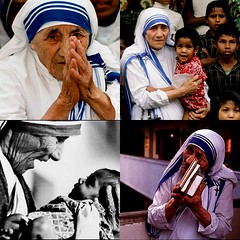
But how do we achieve this? How do we recognize somebody's base humanity? How can we choose to see their humanity in a way that exceeds the boundaries of our own social judgments and limitations? One obvious example of this is a comment that Mother Theresa of India made about her work with people who have leprosy. She was asked how it was possible to work with people who had such obvious and physically abhorrent diseases. Mother Theresa simply said that she saw them as God in all his most distressing disguises. It is clear that she understood that the being that dwells within is divine. It is the sacred part of us. It happens to be the one thing that we all share in common. We are not what is being experienced, or the process of experiencing, we are the one who experiences. She was a great servant of humanity because she saw the being within, and accepted the being without.
Mother-Teresa-collage
Mother-Teresa-collage (Photo credit: Peta-de-Aztlan)

Understanding Our Practices

To train ourselves in this way, we are required to practice in this way. In order to see somebody else's humanity, you must see your own. In order to have sympathy for somebody's predicament, you must have it for your own predicament. This is what takes off the labels, the blinders, the hatreds, and the things that separate us. There's an interesting story about a young boy having a discussion with his father. The boy says that he's going to write a story about himself. The father thought for a moment. Then he suggested to the young man that if he is going to write a story about his life that he should do so in a way that teaches others about their own lives. When we go through this process of training and working on ourselves we do that so we can translate that to others.

If you work with people who have mental illnesses you're going to hear a lot of labels. These are lables that are used by society and ourselves. You may hear bipolar. You may hear depressed. You may hear schizophrenic. These terms communicate some generalities that we can use to gain perspective about an individual's predicament. Each person that we work with will have their individual path from their disease to their recovery. The Buddha suggests that we all have our own path up the mountain. Our job with others is to erase these labels. We must strive to help others find their path. When we help others to remove the labels that they placed upon themselves they will begin to find their own path. In the end we do this because this helps to remove one of the most insidious labels that we encounter. This is the label of," mentally ill".

A Practical Approach To Self-Compassion Continued

So far in this series of articles about self-compassion we have examined several key concepts. For you to foster self-compassion we discovered that:

  • 1. We must actively hold ourselves in a tender and loving manner to come into greater acceptance of yourself you must be able to observe your deepest thoughts and feelings

  • 2. A tool that you can use to see these things clearly asks us to take five minutes at least two 
  • times per day a to still our bodies and minds

  • 3. When we do quiet ourselves we can begin to see ourselves in a permissive state. From this we build the ability to respond in a thoughtful manner to our situation. This ability to respond gives us greater power to change then the thoughtless reactions that is often the norm in life.

Inscribed above Gandhi's tomb is, "Think of the poorest person you've ever seen and ask whether your next act will be of any use." This poverty could be related to many facets of our life. In our own lives many have experienced poverty in our feelings, poverty of acceptance, poverty in our isolation, as well as financial poverty. From time to time we all may suffer a life filled with poverty of many types. These unmet needs can often cause us to feel isolated and alone. It would seem that we are the only people who carry our burdens. We need to begin to remember that we are not the only people to experience loss and isolation. When we begin to see how common that our experience is we can start to feel less isolated. It helps to know that you are not alone even in your pain and suffering. That pain might be tailored to our experience but we are not the only person who bares sickness, sorrow, disease and pain.

The ancient Pali word, "metta" means loving-kindness, friendliness, goodwill, benevolence, fellowship, amity, concord, inoffensiveness and non-violence. It usually used to indicate an approximate means by which we can have a strong desire to see all beings experience peace and happiness. The inclusive attributes helps us to connect with both the joys and suffering of ourselves and others. This can be practiced as a "metta meditation".

For our purposes meditation in this instance means to quietly sit and reflect on thoughts of peace and happiness for all. This includes ourselves. Take a moment, close your eyes and imagine that as far as you can see there are beings of every race, creed and color. Think about a memory where you feel loving and kind. Concentrate on not just the event but the actual feelings involved. You may notice that you have actual physical feelings associated with this. When this feeling is clear enough simply transfer those feelings to all beings. Imagine that this feeling is like a bright light shining in your heart. Let this light of love and compassion spread to cover everyone and everything.

This method helps us to build a rapport with something greater than ourselves. By this process you can gain a sense that you are far from alone. You begin to see your inter-connected nature. As you start to feel this connection you realize that you are experiencing many of the same things that those around you do. This can lead to acceptance that to have pain is a normal part of life and that others share in your burden. Once you come to the conclusion that others experience pain and suffering you can begin understand that your pain is reasonable. It is empowering to see that others move on in their pain and that you can too.