Featured Articles


How To Be The Shaman In Your Own Life

Goldes shaman priest in his regalia
Goldes shaman priest in his regalia (Photo credit: Wikipedia)
When you stop to think of it, the best medicine that we experience enters into our lives when we can understand how to heal our whole life. This happens when we accept the individual truths that we have. These truths are like those of Gandhi. 

In his, "experiments in truth", he found a much more pure path for himself when he looked honestly at each moment. He transformed his commitment to consistency of truth to the acceptance of current truth, examined under the lens of compassion.  It is said that , "each pilgrim has their own path up the mountain." This Buddhist's contribution to understanding counsels us to view our basic needs in a broad yet simple manner. This is seconded by Gandhi's encouragement; do so renewed in each moment and each state of being.

Shamans aptly describe our nature as if we are spirits wrapped in dirt. This dirt is the vary substance of the universe. It is matter. This gives a cocoon for, "us", to dwell in. Our bodies are the, "spacesuits," in which we exist. Most spiritual or vision led healers heal mind, body, and spirit. When we understand how we see things, we start finding the best medical practices for ourselves. This change in understanding is exactly what the shaman is hoping that you find. The answer then comes from the doctor with in. In doing this we stand one step closer to our own healer or shamanic nature.

Almost all of the shamanic traditions include some version of  a, "vision-quest". This is a process where we learn to transcend our egos. It helps to remove the critical portions of our being and it allows us to just experience. 

The real substance of shamanic healing is what we take from these experiences. The impression that this makes on us helps us to choose our point of view. These conclusions can be very instructive. They help us identify what we truly believe. Seeing this clearly is how we are empowered like the shaman is to heal. We can practice the medicine that best suits the needs of the soul, spirit and body.

Deutsch: Mohandas K. Gandhi (1869-1948), polit...
Deutsch: Mohandas K. Gandhi (1869-1948), politischer und spiritueller Führer von Indien. Ort unbekannt English: Mohandas K. Gandhi (1869-1948), political and spiritual leader of India. Location unknown. Français : Mohandas Karamchand Gandhi (1869-1948), Guide politique et spirituel de l'Inde. Lieu inconnu. (Photo credit: Wikipedia)
The sages tell us that this is how we can heal whole lives. It helps us to find healing in a personal way. The, "spirit-led" doctor seeks, with their visions and instruction, to help us contend with the struggles of our reality. It is how we can influence our own existence in this landscape of life. Physicist Werner Heisenberg and others suggest that matter does not exist unless it is observed. It is only the potential to, "be," anything. We create our world by how we see it.

On this basis another physics thought experiment, Schrödinger's Cat, gives a hypothetical consideration about what a cat would experience if locked in a box. In this postulate, the box is hardened against all detection of events within. There is no ability to observe anything accept the qualities that are presented by the exterior of the box. This incidentally establishes the box as matter.

While the box's external is established by our perception, the actual status of the cat becomes questionable. Since there is no one to observe the cat, does it really exist? There is no observation at all. There is nothing to establish the particular properties of the universe without rational conception of being.

The shamanic schools are built upon this rationale. What you really think about your life is why you have the reality that you have. How you really feel about things is what matters. It is, in fact, matter. When we begin to step out of our drama and seek visions, we begin to notice something. We can change our lives by how we choose to see them. It affords us options in the quality of the life that we experience. We can maintain a perspective of wellness. We can have the serenity of confidently and purposely established constitution. We can have a high quality of life.

This mind over matter helps us to create our existence each day. It could be considered to be our form of cybernetic connection to the universe. This is where we affect the all. It is how to have life and life more abundantly. 

Werner Heisenberg
Werner Heisenberg (Photo credit: Wikipedia)
In the case of Schrödinger's Cat, to help "isolate" it from manipulation, conditions existed to keep it from external jeopardy. There was randomly offered, "uncontrolled" peril for the cat. This stipulation existed insuring that you would never know if the cat was ever able to be perceived as alive. We can also learn from this. When begin to see our medicine as the medicine-men of old, we are forced to confront our existence beyond the body. The mystical healers urge us to understand that we fight a losing battle trying to preserve our bodies.

We are beings that are much broader and dynamic than our bodies which are fixed in time. We are eternal beings. What we truly seek is to prosper and perpetuate the being within. If we take the most wholesome practice of our medicine and apply it to ourselves and to others, we not only live better but so do they. This is what makes us all the shaman, the visionary, the ones who heal by faith. It is in this moment we can look at our lives with gratefulness. This is when we can take assurance that we have found the path and restore our wellness. With this revelation absorbed, you have become the shaman for yourself.

What Does It Mean To Be Mindful?

There are a lot of words that we could use when talking about being mindful. In its essence mindfulness is being aware in the present moment. Much of the time our attention is in
vested in our passions about the past. This is because our process of growth has given a foot hold on those memories. Our minds give a sense of present reality to feelings that you have at this time about our past and tries to speculate about our futures. Our minds are constantly drifting in and out of awareness.


For example, for those of us who are old enough to remember when most clocks ticked you would notice the sound. If you apply yourself to something like reading a book your attention becomes captivated by the content. When we stop reading we begin to notice things around us and we notice again the sound of the clock. Our reality is closely tied to what we are aware of. There is a part of you that notices everything. It does not judge and does not get distracted. It is the observer.
Deepak Chopra, (www.deepakchopra.com) who teaches mindfulness as a part of a process of spiritual, physical and mental health suggests that we can step back and look at ourselves in a mindful manner. This ability to be mindful comes when we understand ourselves as one person in several states. There is part of us that observes, there is that part of ourselves that is invested in the process observing, and the part that evaluates what we observe. The more we identify with the part that observes, impartially without getting caught up, the more we begin to have the ability to be mindful about our lives.
While there are many methods for fostering a mindful awareness, most are comprised of practices that quiet the mind. A quiet mind helps us to not get swept away. A quiet mind helps us identify
Jan3 Mindfulness Journal
Jan3 Mindfulness Journal (Photo credit: maile&justin)
 less with the experience and more with the one that experiences. As we have a quiet mind we can begin to watch our thoughts and feelings. As we watch our thoughts and feelings we develop the ability to choose our reactions to what we feel, think and see the world.
The Buddhist have a saying, "There are many paths up the mountain" or sometime it is put as, "There are many paths to God". In mindfulness training you may find that certain paths fit your needs better than others. For some people meditation methods such as watching yourself breathe works to foster a "present awareness". Others may find a simple stroll does the trick. Maybe a good bath puts you in that place where you can watch everything in the present moment. It really does not matter which path, school or technique that you choose if they work for you they will all lead to the same place.
This is a place of personal empowerment and peace. For one who is mindful has the power to do anything they want. We only have this moment. Yesterday is just merely a memory and tomorrow a dream. Right now at this moment, with the power of mindfulness behind you your life can be forever changed.

Bipolar Disorder In Children

What Is Bipolar Disorder?

According to the National Institute Of Mental Health (NIMH) Bipolar Disorder is a serious mental illness that can affect the brain. While less diagnosed, Bipolar Disorder in children can have as much impact as adults with Bipolar Disorder. In the past Bipolar Disorder was known as manic-depression. The term manic-depression is less used today. In basic terms a Bipolar person experiences cycles of unusually intense emotional states. These emotional states are typically seen as periods of either intense high or low emotions. These states of mind and emotion are distinctive.

From time to time we all may feel depression. For individuals with Bipolar Disorder, the depressive phase tends to be extreme. This depression if often incapacitating. This may lead to prolonged or frequent absences from work, school, or other important responsibilities. Bipolar depression may impact personal hygiene and physical wellness. Bipolar Disorder in children has been linked to poor school attendance, behavioral problems, and academic failure. 

As we can see the depressive phase can have significant impact. Bipolar mania may be just as troublesome. Bipolar mania is characterized by periods of extreme energy, excessive and fragmented speech, and often wild or intense beliefs. For example a person in a state of intense Bipolar mania may think that they are somehow superhuman in aspects of their lives. For some this manifests as a completely delusional state of mind. At this level Bipolar Disorder can have a significant impact on both the Bipolar person and those around them. Other symptoms of Bipolar mania can include; Extreme happiness or silliness, rapid speech, trouble falling asleep, loss of focus, risky behaviors, sexual extremes. 

Bipolar Disorder should be diagnosed by an experienced physician. Bipolar Disorder in children can often be a complicated diagnosis. Both children and teenagers can show signs of Bipolar Disorder that are actually symptoms of ADHD or other serious medical conditions. This makes it hard to diagnose children with this disease. 

There are generally three types of Bipolar Disorder that are diagnosed. These are; Bipolar type I, type II, and Bipolar effective. Bipolar I & II are generally determined by the speed that the cycles of the depression and mania. 

Bipolar Disorder Associated With Other Medical Conditions


Percent of Youth 4-17 ever diagnosed with Atte...
Percent of Youth 4-17 ever diagnosed with Attention-Deficit/Hyperactivity Disorder: National Survey of Children's Health, 2007 (Photo credit: Wikipedia)
It is likely that persons with Bipolar Disorder may experience other related medical conditions. Doctors refer to these other conditions as being, "co-morbid". These co-morbid aspects may show up as; substance abuse, Attention Deficit/Hyperactivity Disorder (ADHD), Anxiety disorders, Separation Disorder and others. Sometimes the Bipolar Disorder co-morbidity may be due to side effects of the medications that are given to treat the disease. It is quite common to find a Bipolar patient is over-weight, has elevated blood sugars which may lead to diabetes, or in the case of medicines like Lithium it may be toxic in high doses.  In addition to these conditions bipolar medications my cause a condition known as, "Tardive Dyskinesia". Tardive Dyskinesia is a condition that may be permanent. People with Tardive Dyskinesia have problems with repeated movements of the tongue, face, or other
movement issues.

How Does Bipolar Disorder In Children Different From Bipolar Adults?


Currently the treatment of Bipolar Disorder in children may be less effective then treatment of adults. Often children experience more severe behavior problems and symptoms. Children are more likely to suffer from continual symptoms. This can significantly impact the ability for a Bipolar child to see meaningful recovery. It is important to look at a wide range of support for your child. Since Bipolar Disorder is a life-long disease it is important that you work with your child's teachers, doctors and therapists in order to help your child break the cycles of suffering. Good management of Bipolar Disorder must help to mitigate the impact of this illness in every aspect of their lives. While it is important to teach your child good life skills, Bipolar Disorder in children requires that we work with the child to build long lasting and meaningful support systems. For example a child may have a difficult time performing various tasks in life. This may lead to a breakdown in the ability of a child to deal with the basic life responsibilities. 

Although it may be hard for a child to do certain things on their own, it is possible to get everything they need taken care of in a responsible manner. Responsible behavior may be less about what a person can do as compare with what a person can get done. It is important to get an inventory of the life skills that a child possesses. From there a plan must be developed to either improve the life skills that a child has or to develop solutions for getting these needs taken care of. 

Bipolar Disease in children has been shown to impact their ability to participate in education. It is reasonable to understand that children with Bipolar Disorder may not have sufficient attention to successfully complete assignments or retain the information that they receive. It is very important to build a relationship with the educators that work with your child. 

Over time it is possible for children to realize meaningful recovery. When you work with doctors, therapists, and other professionals you will find medications and techniques that work for your child's specific needs. It is important to find a path for your child that directly effects your child's illness. Each person has different experiencess with Bipolar Disorder. Every path to recovery is specific to the person with disease. It is important to treat the person behind the disease. When you develop the person you have a good chance at mitigating the impact of their mental illness. 

How can I help My Bipolar Child?


It can be very hard to deal with the ramifications of Bipolar children. It is important to educate your self and to find support for yourself. The stress that is induced in you must be accounted for. You can find support for yourself from organizations like the National Alliance on Mental Illness (NAMI). NAMI offers education about mental illness, support for families and peer support. The United States government has several organizations that deal with mental health. These organizations like the fore mentioned National Institute Of Mental Health (NIMH) and the Substance Abuse & Mental Health Services Administration (SAMHSA) offer great information and resources on Bipolar Disorder. Another good resource for dealing with Bipolar Disorder is the Depression & Bipolar Support Alliance.

It is important that you be patient with your child. Please encourage your child to talk about their problems. Be open and listen. Often a Bipolar person will feel isolated and alone. Open support for your child will help them to feel that they are not alone and understood. Help your child to educate themselves about their disease. Hold on to the belief that Bipolar Disorder in children is something that they can recover from. Your children can lead happy and productive lives. Work together closely and you will see lasting change for the better. 

The link between sleep and Bipolar Disorder is becoming more and more clear. A regular and consistent sleep schedule will help your child to deal better with their illness and can have a big impact on the cycles of Bipolar Disorder. 

Threats Of Suicide


It is important that your child receive immediate medical support if they talk about or demonstrate intentions to commit suicide. Every threat or indication must be taken seriously. Do not write off these indications as a need for attention. This could easily lead to the loss of your child. Sometimes these conditions exist because of reactions with medications. This is why it is important to address these issues with a competent medical professional. Another good resource is the toll-free suicide helpline 800-273-Talk (8255) this is run by the National Suicide Prevention Lifeline.

With your help and encouragement the Bipolar Disorder in children is treatable and manageable. With the right tools and resources you can succeed in helping to child with this often troublesome disease.

Emerging Treatments & Technologies - Transcranial Magnetic Stimulation

Ambassador visits Bar-Ilan University
Ambassador visits Bar-Ilan University (Photo credit: UK in Israel)
Recently, I saw a television program that featured transcranial magnetic stimulation. For me this is a new modality for both mapping the functions of the brain and treating certain conditions. I had simply never heard of it before. Although I found it intriguing I never take any of these things at face value. As a form of practical research I asked psychiatrist Dr. Mandelbaum M.D. what he thought of transcranial magnetic stimulation. His response to me was interesting. Dr. Mandelbaum told me that the clinic had been considering the purchase of an rTMS or repetitive transcranial magnetic stimulation device for the treatment of certain mental illnesses. One of the specifically mentioned illnesses was for clinical depression. It has been used on patients for whom traditional medical therapies such as prescription medication have not significantly helped to remit the symptoms.


He mentioned several things that seem to make it a bit impractical for clinical usage at this time. Insurance companies currently will not reimburse for this type of treatment. The cost for an rTMS device is about $70,000. Each application or treatment cycle would cost over $4000 out-of-pocket for the average patient. This makes it impractical as a clinical therapy device. It would seem that with time and further research is conducted, this situation is likely to change. Currently the FDA has only really approved TMS as a less invasive method for mapping sections of the brain.


RTMS has been studied in the treatment of several neurological conditions. Some of these conditions include; Parkinson's disease tinnitus and depression. It also been studied in assisting people alleviate the symptoms of both migraines and cluster headaches. Some of the studies have shown that for the treatment of depressive symptoms, specifically chronic and long-term illness. The protocol for treatment of depression relies on frequent rTMS sessions over a 4 to 6 week period. The initial studies have shown some great promise in helping those with this disease. Approximately 1/3 of the patients saw an improvement in symptoms or practical remission of the disease. This may reduce the reliance on pharmacological  solutions.
TMS works by subjecting the brain to small dosages of magnetic energy. This has an effect on the electrical functioning of the brain. TMS and rTMS are slightly different in their application. TMS is generally used on an individual basis as a diagnostic tool. RTMS as a treatment system is a bit different. As mentioned before, treatment is given on a frequent basis over 4 to 6 week period. The magnetic stimulation is focused deeper in the brain
English: TMS_Butterfly_Coil_HEAD Image:GNUFDLG.png
Image via Wikipedia
. Much more study is required to understand how effective this treatment may be. It is clearly less invasive than other options for treatment such as electroconvulsive therapy or deep brain stimulation. As with any medical intervention there is the potential for some difficulties because of these treatments. For example, a small but statistically significant number of people receiving TMS may experience seizures. TMS can cause some discomfort in the skin or may affect hearing in a negative way due to the clicking sound the treatment makes. It should probably not be used with EEG electrodes because in severe cases it can cause skin burns.
Most of the clinical studies for TMS have been paid for by the developers of the device. It is clear that further research must be done to assess the veracity of the claims made by the device manufacturers. As independent studies are performed in clinical and academic settings a greater quality of evidence as well as a larger sample group will help to suggest the efficacy of these treatments. Some large institutions including the Mayo Clinic do use rTMS as a therapeutic device at this time. It has been adopted by a few specially trained psychiatrists. The Mayo Clinic doctors have been noticing clinical efficacy that is concurrent with the results of other studies. Only time will tell, if transcranial magnetic stimulation will be a cost-effective and functionally effective tool for treatment of various diseases.

Congrats to the members of Painting Pathways Clubhouse.

The amazing people @ PPC knocked it out of the park. They raised $7,000. I am proud to be your colleauge!

Positive Psychology - A Consumer's Story - Anne Koss

Recently someone who read my work said that she felt it was positive psychology. That was wonderful to hear. It is neat to see it work for someone who is close to you. Below is the story of Anne Koss. She has been a wonderful addition to the community that I participate in. So instead of telling you about change in my words now you can hear in the words of others.
Anne Koss
My name is Anne Koss and this is my story.  Before I got involved with Painting Pathways my life was not going so well.  I had made some poor decisions and wound up in jail.  I had struggled with bi-polar illness and addictions.  As a result, I had burned many bridges.  I was scared and my self esteem was at an all time low.  Some of the things that other people take for granted, such as spending time with loved ones and having mutual trust with others, was not possible for me.  When I got out of jail I ended up living in a homeless shelter for three months because I had nowhere else to go.
 My sisters, Mary and Judy, heard about Painting Pathways Clubhouse from Jane at United Way and they made arrangements for me to learn more.  I immediately felt a sense of belonging.  I began making friends right away, and discovered that others had experienced situations similar to mine.  The level of acceptance I felt was amazing.  Participating in the dual recovery support group allowed me to express my feelings and emotions.  Keeping busy in the culinary unit baking, cooking and helping others gave me a sense of purpose.  I began to develop confidence.  I also began to understand the importance of setting goals in my life and following through.
Now my life has changed for the better.  Rather than feeling scared and lonely, I now feel more content and open to positive people.  I am stable.  While I know I have more challenges ahead, I have hope.  I am now living independently in my own apartment and I’m attempting to get custody of my son, Jake.  I am ready to be a good parent, sister and friend.  When people see me today, they can’t believe the changes I have made and the person I am becoming.  My story is just one example of how Painting Pathways is changing lives! - Anne koss
Strong caring and compassionate relationships go a long way to build the person behind the difficulties. But then, this is something that we all face in our lives. We all need someone who is empathetic and can truly understand. In this story Anne found compassion from others. I think that her recovery is based on compassion for herself and the compassion from the members and staff at Painting Pathways. Way to go Anne!

Working With Those With A Mental Illness

We Work With People Not Diseases

When we work with others we have to remember two significant things. First, we are working with the human being not merely the social persona. Secondly, that the real work that we do is on us and not them. We do this work on ourselves because we have to face the numerous labels thoughts and feelings that we project on to the world. There are going to be times when you find it difficult to just interact with someone. Perhaps it's because of some aspect that we see in them. To be honest, sometimes it may be very superficial. Maybe the person you are working with has significant hygiene issues. This may prevent us from recognizing the person behind the hygiene. Some people that you work with can stimulate areas of social intolerance. Perhaps you don't have the same faith. Perhaps you don't have the same culture. Perhaps there's something else that sends you off. It doesn't matter whether it's superficial or not. It's all the same. It puts distance between you and them. When we have closed the distance between you and me, we become us.

English: Sketch of Søren Kierkegaard. Based on...
Image via Wikipedia
The Danish philosopher Kierkegaard said, "if you label me you negate me". There is no one label or group of labels that will ever typify who we are. Even in the Bible God says about himself that, "I am that I am". He does not even try to describe or label himself. The people that you work with are what they are too. They are the, "being", part of the human being. So placing labels on people negates them. It forces us to assign them more labels. This serves to separate us further. When we are working on ourselves, often it's going to start by us being simply ourselves. To give ourselves permission to be who we are and to remove the labels that we place upon ourselves. You have to recognize your being. This can be accomplished via the lens of compassion. It is the work that we will always do first. First we do it for ourselves, and then we are enabled to do it for others.

Recognize The Whole Being, The Human Being


But how do we achieve this? How do we recognize somebody's base humanity? How can we choose to see their humanity in a way that exceeds the boundaries of our own social judgments and limitations? One obvious example of this is a comment that Mother Theresa of India made about her work with people who have leprosy. She was asked how it was possible to work with people who had such obvious and physically abhorrent diseases. Mother Theresa simply said that she saw them as God in all his most distressing disguises. It is clear that she understood that the being that dwells within is divine. It is the sacred part of us. It happens to be the one thing that we all share in common. We are not what is being experienced, or the process of experiencing, we are the one who experiences. She was a great servant of humanity because she saw the being within, and accepted the being without.
Mother-Teresa-collage
Mother-Teresa-collage (Photo credit: Peta-de-Aztlan)

Understanding Our Practices

To train ourselves in this way, we are required to practice in this way. In order to see somebody else's humanity, you must see your own. In order to have sympathy for somebody's predicament, you must have it for your own predicament. This is what takes off the labels, the blinders, the hatreds, and the things that separate us. There's an interesting story about a young boy having a discussion with his father. The boy says that he's going to write a story about himself. The father thought for a moment. Then he suggested to the young man that if he is going to write a story about his life that he should do so in a way that teaches others about their own lives. When we go through this process of training and working on ourselves we do that so we can translate that to others.

If you work with people who have mental illnesses you're going to hear a lot of labels. These are lables that are used by society and ourselves. You may hear bipolar. You may hear depressed. You may hear schizophrenic. These terms communicate some generalities that we can use to gain perspective about an individual's predicament. Each person that we work with will have their individual path from their disease to their recovery. The Buddha suggests that we all have our own path up the mountain. Our job with others is to erase these labels. We must strive to help others find their path. When we help others to remove the labels that they placed upon themselves they will begin to find their own path. In the end we do this because this helps to remove one of the most insidious labels that we encounter. This is the label of," mentally ill".

A Life You Can Walk Through

Robert Frost, American poet

Introduction by Robert Frost, Road Not Taken

If you take a moment to consider it, there may be some benefits to walking. You may find that it is an investment that pays off in your whole being. In his poem, The Road Not Taken, Robert Frost says: "Two roads diverged in a wood, and I--I took the one less traveled by, And that has made all the difference". He begins this poem wondering about how to choose the path to take. In the journey of life, what dictates the roads that we will follow? How do we choose when we come upon one of the many junctions that we face? Do we choose our path because the rest of the herd goes there?  Does that suit our truths and individual needs? We should also think about how we will travel it. We have to understand what will bring us the most benefit. Will we walk, drive, or fly? Why do we choose to do it that way?


Great benefits of walking


For me I have chosen the path that dictates a simple life. I have a literal road that I walk. Actually, I walk almost every where that I go. This has introduced me to the benefits of walking. For me the decision to use my feet as a primary mode of transportation has made, “all the difference”. It helps me to take things as they come. Literally and figuratively one step at a time. Not only do I experience more of what goes on around me, I have found tranquility. I am dedicated to this simple act. It has brought me great peace and has changed my point of view about the world.


Here are 5 great benefits of walking


1. Walking gives us a way to manage the momentum of our lives.
2. It enforces a certain determination to reach a goal.
3. We work with each step to both identify and overcome those things that challenge us in our path.
4. Regular walks build the health and vitality of our bodies.
5. Our minds get the support that a healthy body provides

Walking benefits your whole life

A life you can walk through


We all search for peace and equanimity. How many of us find it? In my experience it seems to allude most of us today. We can have busy and frenetic lives. Whether you choose, like I have, to walk it may not matter. But ask yourself, do I take moments of quiet reflection in life?  We can foster peace and well-being.  This happens when we understand where we go and how we get there. Please consider your road. Perhaps you may consider how walking can benefit you. When you do, you may also experience a life you can walk through.

Tickle The Infinite Possibilites Within

There are benefits from existing in a meditative state of being. When we meditate we are in a restful and peaceful state of mind. We have a gentle awareness. In its essence, meditation is being aware of the present moment. Through meditation we seek to fully experience each moment. This can be hard to affect.  Much of the time our attention is invested in our passions about the past or our expectations of the future. What we experience and learn in life is very compelling. Our minds give a sense of reality to our feelings about past and future events. With practice the mind can become more focused on the present. 

The mind is constantly drifting in and out of awareness. At one time most clocks made a ticking sound. You would probably notice the ticking as you walked into the room. If you sit down and start to read a book, your attention becomes focused on the content. You no longer experience the sound. When you stop reading, you will begin to notice things again. Perhaps you may now hear the sound of that very same clock, ticking away. Our reality is closely tied to our awareness and our feelings. 

English: Deepak Chopra in November 2006, speak...
Image via Wikipedia
There is a part of all of us, that simply notices all things. It does not judge and does not get distracted. It is the observer in you. It is a place of restful awareness. It is the part of all of us that is in balance. Deepak Chopra teaches mindful meditation as a process of spiritual, physical and mental health. He suggests that we can step back and look at ourselves in a more conscious manner. From here we can live in a meditative existence. It empowers us. We make decisions based upon quiet reflection in a mindful way. We do not give in to a chaotic reaction. It gives us at least one moment of consideration,  This can make all the difference in the world. It helps us to make the most fundamental choice that we can make. This is the choice of how we choose to see things. From this ability to choose we can have lives of peace. Ask people like Wayne Dyer, Ram Dass and many more and they would likely tell you the same thing.

The practice of meditation is not new. There have been meditative conclaves from almost all religions and wisdom traditions for thousands of years. These practices include the Gregorian monks, the Sufi dervishes, the writer of  the Psalms,and the Vedic rishis. All have the same goal.  They were not really seeking to become people who meditate. What we are really seeking is to be free. We yearn to transcend our normal state of being. We seek equanimity and peace. Meditation is merely a tool. 
English: This is a photograph I personally too...
Image via Wikipedia

There's a wonderful story about a spiritual teacher who was giving a lecture. He was getting very little reaction from the crowd. There was one little lady sitting up front. She had to be about ninety years old. She just kept nodding her head at various parts as he talked. You could tell that she understood perfectly what was being said. Today, he was teaching on meditation and how it changes our states of being. It is where we find the most divine part of ourselves.

Later, after the lecture, the teacher sought out the old lady. She did not seem like a person who normally would come to his lectures. They tended to be a bit younger and New-Age minded. He was simply amazed that someone like that could so identify with his teaching. Why did she get it so perfectly when no one else seemed to? How did this little old lady understand this in such an experiential way?  How did she know how to transcend her normal state of being? He looked into her eyes and asked her how she knew? She looked at him and simply said, "Well young man, you meditate, I crochet!" So we can broaden the concept pretty far on that basis. Everything can be meditative.

We exist in several states of being. There is  the observer state. There is the state processes what is being observed., Then there is the critic that evaluates what we observe. The more we identify with the part of ourselves that only observes, with its impartial view, we can begin to have the ability to be mindful about our whole lives.

The critical aspect of our being is clearly the most insidious. It is built upon our experience base and our process of socialization. When you look into the mirror you must ask, who am I  really? Are you what others tell you that you are? Do you live your own truth? This again, is a part of being mindfulness about your life. It helps us to find our way on the path. This is the part that the observer allows us to change our lives.


English: Photo of man Sungazing during sunrise...
Image via Wikipedia
While there are many methods for fostering a mindful awareness, most are comprised of practices that quiet the mind. For most people, a quiet mind is proceeded by a quiet body. Physical relaxation can be an important factor in reaching the meditative state of mind. A quiet mind helps us to not get swept away. A quiet mind helps us identify less with the experience and more with the one that experiences. As we begin to have a quieted mind, we can watch our thoughts and feelings. 

Perhaps this may be a good example. Try to imagine all of your thoughts as if they were leaves flowing down a stream. When we are meditative our thoughts pass by like the leaves going with the current. For a moment we acknowledge them. Then let them pass by. They no longer hold our awareness. This will allow us to see each thing for what it is. Now we can make the only choice that we have. This  is the choice about how we choose to see things.
The Buddhist have a saying, "There are many paths up the mountain", or sometimes, it is put as, "There are many paths to God".  In mindfulness training you may find that certain paths fit your needs better than others. For some people meditation methods such as watching yourself breathe works to foster a "present awareness". Others may find a simple stroll does the trick. Maybe a good bath puts you in that place where you can watch everything in the present moment. It really does not matter which path, school or technique that you choose if they work for you they will all lead to the same place.
This is a place of personal empowerment and peace. For one who is mindful has the power to do anything they want. We only have this moment. Yesterday is just merely a memory and tomorrow a dream. Right now at this moment, with the power of mindfulness behind you your life can be forever changed. Now you know, how to tickle the infanite, within. 

Bipolar Insomnia

Bipolar Insomnia

Mental illness is often a leading cause for sleeplessness for those who have been diagnosed with a mental illness. For individuals with bipolar disorder sleep can be a major problem. In some cases without medical intervention people who suffer from this disease can be sleepless for days. For general practitioners, diagnosing a sleep disorder may not include consideration of bipolar disorder. This is particularly true in situations where medical history does not include the diagnosis for this disease or when a patient does not self-identify as being bipolar.
Bipolar disorder is estimated to affect from 2% to 7% of the people in the United States. It is further estimated that almost 10,000,000 people will develop the illness at some point during their lives. Bipolar disorder is often misdiagnosed because it can be confused with other diseases. Often people with mental illnesses have more than one diagnosable disease. For instance, if you are bipolar it is highly likely that you will have substance abuse issues, high-risk sexual behaviors, or other symptoms. Sometimes these symptoms can be very hard to differentiate. If you have sleep problems and are bipolar make sure that you tell your doctor. It will help significantly. Keeping your doctor informed can help you to find relief from symptoms sooner. It also becomes easier to find the proper treatment.

Sleep is a major factor in maintaining stability

For all individuals sleep is an important part of maintaining physical and mental well-being. There are various reasons that people have problems sleeping. Research shows that individuals who have bipolar disorder are at high risk for instability without appropriate sleep. Sleep is a basic component in managing the stability of this disease. Without proper cycles of sleep our bodies' basic biorhythms can be significantly disturbed. These biorhythms or "circadian rhythms" manage or contribute to not only our mental well-being but our physical well-being also. Sleeplessness is not the only problem. Too much sleep can also be a major factor of instability. It can contribute significantly to depressive cycles.
If you suffer from bipolar insomnia, it's important to take some basic steps that will help you to manage sleep. The steps can be called sleep hygiene. Sleep hygiene includes several factors:
  • 1. Try to avoid napping. If you do need to nap limit napping to the early afternoon and for a short duration.
  • 2. Cut down or avoid the use of caffeine entirely.
  • 3. Limit your consumption of alcohol.
  • 4. Regular exercise is important because it helps to limit factors like adrenaline and quiets the body. The quiet body helps to produce a quiet mind.
  • 5. Meditation or relaxation methods can help significantly when patients have sleeplessness. Often this helps to attack the problems that are introduced by hypomania and mania.
  • 6. A helpful tool to help you and your doctor understand your sleep situation is to record your sleep cycles and other pertinent information in a log book or journal.

Treating Bipolar Insomnia

If you're experiencing bipolar insomnia, there are several ways that your doctor may choose to treat your illness. Often this will be through the use of medication. Medications such as Seroquel can help to induce sleep. This class of medicines is called atypical antipsychotics. These medicines can act in a powerful way to induce sleep. For some patients with bipolar insomnia traditional sleep medications like Lunesta or Ambienmay not work. Trazodone may also be used as an off-label treatment for insomnia. Trazodone is an older treatment for depression. Generally with people who have bipolar disorder antidepressants are not used. It can cause the bipolar individual to have a, "bipolar switch". This switch can cause a person to come out of depression and enter mania. Careful consultation with your doctor is recommended. For those with bipolar induced insomnia it is recommended that treatment should come from a properly trained psychiatrist.

Over-the-counter medications for sleep

Over-the-counter medications for sleep are generally formulated from antihistamine medications. Many of these medications are older drugs. These antihistamines tend to make people sleepy. This is a major factor in why antihistamine medications have been changed. Newer antihistamines do not generally stimulate sleep. Other over-the-counter medications or supplements may also contain ingredients such as Valerian root, melatonin, or other herbal central nervous system depressants. Bipolar insomnia may not respond to over-the-counter medications.

Finding solutions for bipolar insomnia

To find the right solution you may have to try several approaches. It also might require the use of more than one of these options at the same time to help the bipolar individual stabilize both their sleep and their lives.

Can Changing Your Mind, Change Your Brain?

Can our brains change in structure over time? Do our brains re-wire itself based on what we experience? These are interesting questions. Scientists have wondered if our perceptions and experiences have the ability to change the physical makeup of our brains. In 1890, William James, published an article in The Principles of Psychology. There is growing evidence that changing your mind does change your brain.

In the 1970’s and 80’s, many tests were preformed to determine if changes in perception did have the ability to change the physical structure of the brain. Some of these tests were developed and implemented by Michael Merzenich, Jon Kaas, and Doug Rasmusson. These tests seemed to show that there is a strong reason to believe that your state of mind does change your brain. However, there are some scientists who are not certain that this is the case.

There are two main types of neuroplasticity. These are generally known as, “positive“ or “negative” plasticity. This means that our mind changes it’s wiring and either grows connections or disposes of connections depending on the circumstances. An example of negative plasticity occurs when pain or trauma changes the amount of neurotransmitters. These chemicals have a big impact on the brain. If the impact of these chemicals are strong enough they will change  the structure of the brain. Since 2005 research has continued to show that the the brains ability to change is quite rapid.

Richard Davidson, is a neuroscientist at the University of Wisconsin. He has led experiments in conjunction with the Dalai Lama to see if meditation can have an effecton the structure of the neuropathways. The research seems to indicate that meditation does affect both long and short-term restructuring of the brain. This is particularly true in areas that affect emotions such as anxiety, fear, depression, and anger.

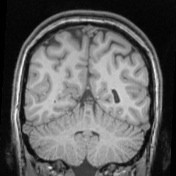
brains!
brains! (Photo credit: cloois)
From this research it seems to be clear that how you see the world and how you experience the world does have the ability to affect the physical structure of your brain. In this case there is literally a connection between mind over matter. It’s important for us at all times to look at ourselves in the self compassionate and friendly light. Through this compassion and understanding weekend change some of the fundamental connections in our brain to promote our health and well-being. When we seek to change her mind it’s important to remember that we also change your brain. This changes our ability to adapt to the circumstances and experience around us. The ability to change our brains could be a substantial tool in the arsenal for those who have mental illness to find meaningful and lasting recovery.